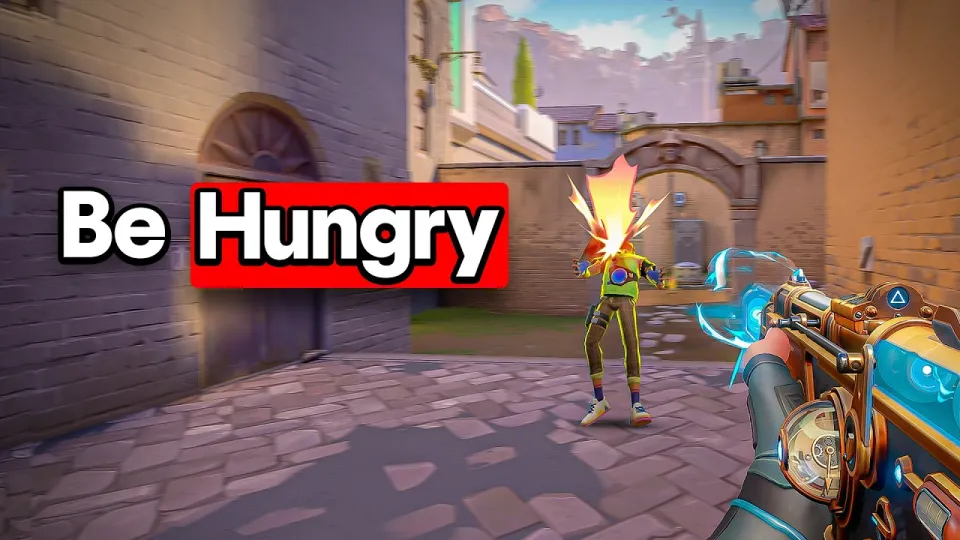
How do you get so good at Valorant that it feels like smurfing?
Want articles like this for your own video to promote it on YouTube and Google? Order them through the Telegram bot @sat_sit_bot. The bot writes and publishes the articles itself (with your YouTube video embedded) on popular topical websites (no ads). Free trial — 50 articles.
Key takeaways
- "Smurfing" is not a rank trick — it is the result of reacting to the enemy instead of running a fixed plan.
- Unpredictability beats raw aim: the same peek, the same timing and the same site every round makes you readable.
- Movement is a trainable skill — Range drills with movement error on are the cheapest way to fix it.
- Coaching programs such as the Immortal Roadmap promise 5 divisions of progress in 10 weeks with a guaranteed structure.
- Reviewing your own VODs and asking specific questions beats grinding ranked games on autopilot.
What actually makes a player look like a smurf
Getting so good at Valorant that it feels like smurfing comes down to two habits: reacting to what the enemy is doing instead of running a fixed script, and staying unpredictable so nobody can pre-aim your timing. Mechanical skill matters, but the players who look two ranks above their lobby are usually the ones who change their approach every round while everyone else repeats the same default. If you want a structured, coached version of that process, the Immortal Roadmap Program is the route coach Konpeki pushes in his guide, and it is built around exactly these habits.
That is the honest answer. There is no secret setting, no crosshair code and no agent pick that turns a Gold player into a Diamond player overnight. What there is, is a small set of trainable behaviours that compound: how you take duels, how you move, how you read the enemy's economy and habits, and how honestly you review your own mistakes.
Why reaction beats a pre-planned round
A pre-planned round is comfortable and it is also the fastest way to become predictable. If you always smoke the same choke, always push the same angle at 0:55 and always rotate through the same connector, an opponent who has watched two of your rounds already knows your next ten seconds. The fix is not to play randomly — it is to play off information.
Practical version of that idea:
- Enter the round with an intention, not a script. "I want mid control" is an intention. "I always take mid at the start" is a script.
- Let the first piece of information change the plan. A kill on the opposite site, a whiffed Operator shot, a dropped spike — each of those should shift where you go next.
- Vary your timing deliberately. If you fast-pushed last round, walk this one. If you played passive, take an early duel.
- Track enemy patterns the way they track yours. Most players in a ranked lobby repeat the same setup on defence for the entire half.
This is the single biggest reason a strong player looks like a smurf in a lower lobby: they are not faster, they are simply responding to things the other nine players have stopped noticing.
Movement is the skill most players never train
Most Valorant players practise aim and never practise movement, then wonder why their aim falls apart in real games. Movement is what makes your shots land: strafing into a stop, counter-strafing before you fire, and peeking wide or tight depending on the range of the fight. A player with average aim and clean movement beats a player with great aim and sloppy movement almost every time.
How to train it without overcomplicating things:
- Use the Range with movement error enabled so the game tells you when you fired while still moving.
- Practise one shot per strafe direction: move left, stop, fire, move right, stop, fire. The stop is the skill, not the shot.
- Lower the movement error multiplier if full-speed strafing is too hard at first — the point is to make the stop automatic, then raise the difficulty.
- Take the same drill into deathmatch and force yourself to counter-strafe before every kill, even if it costs you duels.
One recurring question from viewers is whether you should release the movement keys between shots or keep strafing continuously and fire as the direction switches. Both exist, but the version that transfers into ranked is the one where the shot happens on a genuine stop — a fraction of a second where your velocity is zero.
Aim routines that transfer into ranked games
Aim training fails when it lives in a different game from the one you actually play. A 30-minute KovaaK's or Aim Lab routine can raise your raw flick speed and still leave you losing duels, because ranked duels are about crosshair placement, angle choice and pre-aim, not about reaction time in isolation.
A routine that actually transfers:
- Warm up in the Range for 5–10 minutes: bots, one-taps, then strafe-shooting.
- Play one deathmatch with a single rule, such as "crosshair at head level the entire game" or "never wide-swing without a reason."
- Play your ranked games with one focus for the session — for example, only taking fights you have an escape from.
- After the session, write down one thing that cost you rounds. One, not ten.
Crosshair placement is the cheapest improvement available to almost every player below Immortal. If your crosshair sits at chest height while you walk around a corner, you are giving away the first 200 milliseconds of every duel before the fight even starts.
Reading the lobby like a higher-ranked player
Smurf-like play is largely information play. Higher-ranked players constantly ask questions that lower-ranked players never consider, and the answers change their decisions in real time.
- Economy: who on the enemy team is on a save, who is on a full buy, and what does that mean for where they will stack?
- Utility: which smokes and flashes have already been used this round, and therefore which angles are now free?
- Tempo: is the enemy team slow or fast, and are they reacting to you or dictating the pace?
- Man advantage: with a 5v4, do you take space or do you trade time? Most players push and lose the advantage.
None of this requires better aim. It requires attention. In a lower lobby, one player who is genuinely tracking these four things will look like they are playing a different game.
The habits that separate climbers from stuck players
Players who climb consistently share a small number of habits, and none of them are mechanical secrets.
- They review their own games, not only their highlights. Watching a loss and finding the round where you died first for no reason is worth more than an hour of aim training.
- They play a limited agent pool. Mastering two or three agents' utility timings beats flexing onto eight agents badly.
- They stop playing when tilted. Losing three in a row and queueing again is how a session becomes a derank.
- They ask specific questions. "How do I improve?" gets a vague answer. "On defence I keep dying to the same B-main push — what should I change?" gets a fix.
- They accept that progress is measured in weeks, not in one lucky win streak.
Coaching exists precisely because these habits are hard to see in your own play. Konpeki's channel is built around that idea: short, direct breakdowns of the decisions that cost players ranks, rather than mechanical hype.
Common questions and doubts from players
A few themes come up again and again in the comments under this kind of guide, and they are worth addressing directly.
"I am low rank — is this advice even for me?" Yes. Reaction-based play and clean movement are not advanced techniques; they are fundamentals that low-ranked players skip. Starting them at Silver is far easier than unlearning bad habits at Diamond.
"Can I do this on console?" The principles are identical — crosshair placement, timing variation, economy reading — but the input changes the movement drills. Controller players should focus on strafe discipline and sensitivity consistency rather than counter-strafe speed.
"Do I need a coach to climb?" No, but structure helps. A coach or a program shortens the loop between making a mistake and understanding it. If you are self-coaching, the equivalent is reviewing one VOD per session with a written note.
"How long until it feels like smurfing?" Expect a few weeks of deliberate practice before the change is visible, and a full act before it is stable. The players who improve fastest are the ones who keep the routine boring and consistent.
Useful links
- Immortal Roadmap Program: https://roadmap.gg/v/lUfrMRb74SE
- Free coaching resources and office hours on Discord: https://www.discord.gg/UnRETVmRpV
- Twitch: https://www.twitch.tv/konpekichan
- Twitter: https://twitter.com/coachpeki
- TikTok: https://www.tiktok.com/@coachpeki
Final thoughts
Playing well enough to look like a smurf is not about a hidden trick — it is about reacting to the enemy instead of repeating a script, training movement as seriously as aim, and reviewing your own decisions honestly. Those three things, done for a few weeks, change more rounds than any crosshair or sensitivity change ever will. Konpeki's breakdown on the channel frames the same message: the players who climb are the ones who make the enemy react to them, not the other way around. If you want that process compressed into a structured plan, the Immortal Roadmap Program is the entry point the guide points to, with a free call to check whether you are a fit before committing.
Source: How to Get So Good at Valorant it Feels Like Smurfing · Markdown version
Questions & answers
What does "playing like a smurf" actually mean in Valorant?
It means your decisions look a rank or two above the lobby: you react to information instead of running a fixed plan, you vary your timing, and you win duels through crosshair placement and movement rather than raw flicks. It is a set of habits, not a hidden setting or a specific agent.
How do I train movement for Valorant?
Use the Range with movement error enabled and practise one shot per strafe direction, making the stop before firing the actual skill. If full-speed strafing is too hard, lower the movement error multiplier, then raise it as the stop becomes automatic. Carry the same rule into deathmatch so it transfers to ranked.
How long does it take to noticeably improve and rank up?
Expect a few weeks of deliberate, consistent practice before the change is visible in your games, and roughly a full act before it becomes stable. Progress comes from a boring, repeatable routine plus one honest review per session, not from a single long grind.
Can I apply this advice on console or as a low-ranked player?
Yes. Crosshair placement, timing variation and economy reading work the same on console, though controller players should focus on strafe discipline and consistent sensitivity rather than counter-strafe speed. Low-ranked players benefit most, because these are fundamentals that are easier to build early than to fix later.